The Mystery of Forex Rate Fluctuation

A forex rate fluctuates because of many factors. Short term demand and supply is the most prominent factor. But there are also more factors behind the scenes.

Determining How a Forex Rate is about to Move

Determining the move that a forex rate is about to make, is a hard thing to do, most of the time. Forex traders however can identify time zones. Such as trading time zones and chart patterns which help identify, in terms of probability only, the next move. Chart patterns and technical analysis works only about half the time, and most indicators actually fail, based on a 50-50 chance. Traders know this very well, and never expect an indicator or chart pattern to never fail. The problem is knowing when it fails and when it doesn’t. Most forex strategies are based on observations on forex charts and fundamental data. In such cases, the timing can still go wrong, and traders may predict a market movement way too early, or within timing limits that are too large. The end result is that such information is often of no trading use. And the more precise the entry and exit numbers, the more difficult it gets, because the timing is always off, by hours or even by many days. Market complexity does not allow anyone to have the upper hand, and there a natural limit to how good a trader is. That’s why timing will always be wrong, more or less. The concept of supply and demand sounds good, but without looking at momentum and longer term trends, supply and demand data become useless. As a currency pair may start to move as expected, and then reverse direction right after you placed that trade! As a result, most trading advice which is highly specific, tends to fail much more, and in more serious ways, than trading advice which is loosely defined.
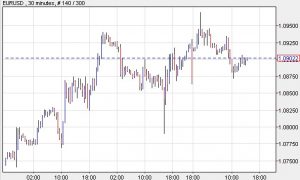
Forex Rate
The mystery of price fluctuation boils down to expectations for tomorrow. And not what is happening here and now.


Other Factors Impacting a Forex Rate

A forex rate can also be impacted by not so obvious factors, such as expectations on interest rate policy, and expectations in general. These are not even real pieces of data, but simply thoughts and expectations that X event will happen on day Y. And guess what, when day Y comes, the data might be completely different, or as expected. And regardless of this, the exchange rate can actually reverse on that day, even if the news reported, seems positive. And what is forex without these expectations, these often imaginary and groundless thoughts? Well, it is precisely these imaginary thoughts that make markets more interesting to trade. Since traders and investors always care about the future, not what is happening right now. This factor alone helps make markets more liquid and efficient, because all traders and investors have different expectations for the future. And when you are buying an asset, any asset, it is because someone else is selling it to you. It all boils down to difference of opinion, and that’s what makes buyer and seller exchange things. It is also true that markets are not actually always right, as many textbooks would have you believe. The economic report numbers are proof for this. Markets rally or decline prior to expected X event being reported on day Y. And often times when day Y comes and the X economic number proves the market had been totally wrong for several weeks. So how on earth is the market always right on that time frame? The market simply oscillates between imaginary expectation periods and reality check days.

Why Forex Exchange Rates are So Confusing

Forex exchange rates seem to often defy common sense, and even the best of technical chart patterns. This is so because each currency pair has its own secret.

Forex Exchange Rates can Defy All Logic

Forex exchange rates can often defy all logic and common sense, because of hidden factors. The US dollar for example, is such a currency. It obeys technical analysis for days and days on end, but it may suddenly defy all of technical signals, without much explanation. The US dollar is a great example, of a currency which can work as a safe haven, for investors losing their risk appetite. So what really happens is that heavy and fast buying of the US dollar takes place, and the currency rises sharply. It defies all bearish technical forex signals seen on various forex charts. And it leaves technical traders defeated in the process, unable to see the larger picture. Believe or not, the US is a safe haven country. Despite the massive national debt, whether a country is strong or not, it all boils down to military strength, diplomatic power, and nuclear deterrence. In other words, if the US wasn’t armed with nuclear weapons, the US dollar would not act as a safe haven. And investors would not buy the US dollar at times of panic and global unrest. Which is why nobody buys currencies of peaceful countries, at times of global uncertainty. So this safe haven factor comes and takes control of the US dollar, every now and then, defying all logic technical analysis. The most common technical analysis method which fails the most is Fibonacci retracements and extensions. Traders would use a forex calculator to work out these levels, and they do so correctly. But they tend to believe too much in what is a collective trading action phenomenon, and not a real indicator. So Fibonacci trading tools are the first to fail, no just with US dollar but with many more currency pairs. They are simply too ambiguous, and about as useful as coin-flip based predictions. You can in fact match Fibonacci trading performance by simply flipping a coin and trade on the outcome. The rest is all hype by the vendors of these products.

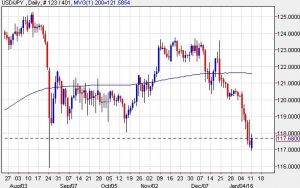
Forex Exchange Rates
Analysts often get the USDJPY trend completely wrong, because they rely too much on economic activity. Ignoring geopolitical factors, and which of the two currencies in the pair is the safe haven one.


Forex Exchange Rates are Country-Specific

Many more forex exchange rates are impacted by factors, similar to how the safe haven factor impacts the US dollar. Some currencies are impacted mostly by trade balance, others by inflation, and others by entirely different data. Even expectations on the outcome of a national election, can impact a country’s currency on the weeks leading up that election day. Generally, economic numbers do impact currencies to a great extend, but each quarter of the financial year is seen as unique. So an economic report on employment may always play some role. Whereas inflation reports may act in either way, and impact the exchange rate in question either in a positive or in a negative way. It all depends where inflation stands, where it has come from, and how the economy has progressed from one quarter to the next. Very low inflation is bad, high inflation is always bad. And the country in question wants to continue to attract foreign investors, real estate buyers, and keep an influx of foreign money in place. Anything that would disturb that influx of foreign capital, will make the national currency go down.

Learning through a Forex Trading Course

Trading can be quite a challenge. Learning through a forex trading course can take years off the learning curve, and help make decisions to customise things.

How Learning through a Forex Trading Course Makes the Difference

A forex trading course will provide the new trader with many key directions so as to guide them through the many techniques and strategies available. The goal is to make things clearer, not provide specific directions. It is always up to the individual trader to choose how they want to trade exactly. And how they will differ from other traders taking the same course. All forex strategies may be useful to one person or another, at some point. But people tend to develop preferences and highly tailored techniques, which tend to be unique for each one. Perhaps as unique as one’s fingerprints. That’s why all learners gradually deviate from the original materials they once were taught, and develop what they see best for them. The course however helps provide guidance and few important tips, so as to know about some very important risks, tricks and characteristics of trading. Every trader is unique, and learn things in a different way. Some courses teach a lot of stuff on divergences, hidden divergences and patterns on the charts, which would take a much longer time to figure out, if it wasn’t for attending such a course. But when these traders apply divergences in their own trading, they tend to customize things, bring in more indicators and tools, and usually improve the divergence trading theory.

Forex Trading Course
Realistic instructors will be very critical on you, no matter how well you trade.


How Good is a Forex Trading Course?

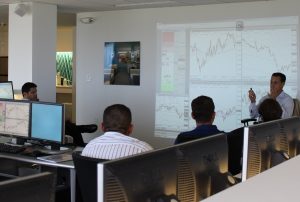
A forex trading course is only as good as its instructor. That’s why it is a course where you can ask questions and challenge the instructor, rather than read the same material through a book. A good instructor should be very familiar with what they teach, and it should their own material. Good courses are expensive, and seating is limited to less than 10 participants. This is essential, because if there too many participants, the instructor cannot assess each and every one properly, and identify their biggest mistakes. Especially when trading at fast pace, during forex news release times where one has to use various trading tools, figure out numbers, and use a forex calculator, the instructor will see who is failing and who is doing not so good for the longer term. The instructor will identify mistakes that you make, which could ruin your trading 3 or 6 months down the line, even if you are trading profitably during the course. So a good instructor is much more likely to be critical of you, rather than congratulate you on anything. In fact some good instructors never confirm your way to trading success, even if you pass the course with flying colors. They will still tell you that you will most likely fail, and blow your account later on. This how cynical and realistic good instructors are, because they want you not to get complacent and start trading in a mechanical way after your first few profitable trades.

Using the Best Forex Trading Platform

Settling with the best forex trading platform makes things easier for trading the markets. Trade placement and account management become comfortable and better.

Using the Best Forex Trading Platform, the One You Find Most Comfortable

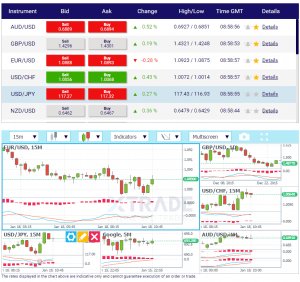
Why trading comfort is important? It is important because traders can navigate faster around the trading platform, avoid making mistakes, and they are able to use it just like they use every other business tool. Settling with the best forex trading platform is therefore a matter of customization and personal comfort. Everyone who wants to learn how to trade forex, looks around for comfort and reliability. Is kind of like buying a new car, where the buyer want to make sure that the driver’s seat is comfortable, the light switches are easy to use, and doing things while driving will be second nature to them. Different traders use different forex strategies, very different sometimes, but they all want speed, accuracy and dependable trading tools. In fact, savvy fore traders are not sold on free bonuses and promotional offers, not even a broker’s popularity. What they want, is a good trading platform, good liquidity and trade execution speed. Inexperienced amateurs on the other hand, mistakenly think that they are going to be successful in their trading, so the only thing that matters is boosting their account balance by getting this or that free bonus. But things don’t go as planned, and those settling with not good brokers, end up getting not so good trading platforms. The end result is that they end up blowing their account in less than two months. All through losing trades, trading inefficiency and all kinds of blunders.

best forex trading platform
A good trading platform should be easy to use, reliable, and provide comfort. So that trading actions become second nature to the user. Especially in day trading, this is a must!

Best Forex Trading Platform for Day-Traders

Day traders always look for the best forex trading platform, because the fast nature of day trading really does require ultra reliable platforms. Ones that do not fail, and even allow traders to rectify their mistakes right away. Investing in foreign currency through the art of day-trading, is more than just a set of artistic skills. The trader must always be ready to take new risks, hedge open losing trades with opposite trades, and make transitions back and fourth between knowing the market and not knowing it. Good day traders handle risk so well, that they have an open minded approach to losing trades. A good trading platform allows them to deal with such losing trades, or rather trades gone wrong. It may take hours to figure out if these trades are actually completely wrong or not. So they take appropriate action to limit losses, modify stop losses, and make new trades. The comfort that their trading platform provides, allows them to view all trades right away, and make the necessary changes. This enhances money management as well.

The Problems of Day Trading Forex

Trading is a tough art to master. But the pros and cons of day trading forex become apparent once a trader begins to face the everyday market risk and stress.

Seeing the Bad Aspects of Day Trading Forex First

Day trading forex has many advantages, one of them being the fact that the trader is capable of capturing many small price movements. Movements that would not otherwise had been captured, thereby resulting in substantially larger profitability. So that a movement in a currency pair, seemingly being just 50 pips on the daily chart, actually hides much more volatility. And it may actually hide as much as 150 pips or more through sideways trading actions. So day trading definitely is a big plus, at increasing volatility and very likely profitability as well. All forex strategies may have something good to offer, the rest is down to the individual trader who has undertaken the task of making money through trading. There is though the darker side, the side of reality where problems become too difficult to handle, and day trading becomes almost a daily battle to survive in the markets. While it sounds possible to succeed in day trading, the time commitment required is really a big price to pay. Most amateur day traders actually achieve poor trading results, even those that win, do in fact make less than minimum wage. Then there is a minority of around 15% of traders, who do pay the time commitment price but also make very good money. The bad aspects of day trading are such that only 15% of those traders can handle them in a productive way. Day trading like that 15% of traders who make it big, requires for example a great deal of social isolation, and not being able to accept any phone calls during trading hours. In fact any kind of distraction is bad.

Day Trading Forex
Determination to win, means social isolation, time commitment, and staying away from peer syndrome habits.

How that 15% of Traders Succeed in Day Trading Forex

Day trading forex requires top notch, relaxed trading strategies, and knowing your market better than most other traders know their markets. The use of forex news requires a special approach, as does the use of any forex calculator for working out key numbers. That 15% of traders, does not use generic methods, does not use any ridiculous popular indicators, at least not in the obvious way. And it certainly knows how to handle those negative aspects of trading. Isolation, time commitment, and risk handling are few such bad aspects, because in general they are difficult to handle. And finally there is the bright side of things. Good day traders can make as much as $10,000 per week, and still be at the amateur level, but definitely very determined to succeed. Good traders never consider themselves professional and perfect, they always look out for that overlooked risk, and not becoming complacent. Even those $50K a month day traders consider themselves amateurs, and vulnerable to making mistakes. There is no guaranty of on-going profitability. And all those negative aspects may overwhelm the trader at any given time, ultimately sabotaging their trading.

How to Become a Better Forex Trader

Many tips on becoming a better forex trader require making big changes and getting out of your comfort zone. Is there a better way to adapt and apply such tips?

How to Really Become a Better Forex Trader

In order to stay comfortable and still become a better forex trader, all one has to do is take things slow, and evolve naturally. Change, as with all kinds of change in life, can be pleasant when it happens gradually, over time, so that we do not lose our comfort. Most trading tips are neither bad or good, they are simply general advice. In fact most trading tips can be used in creative and effective ways, when one relaxes the so called unbreakable rules, and bends theses rules as they see best. The best way to learn forex trading and become a much better trader, is to accept the fact that changes are required. Especially tips which focus on risk control and stop loss placement. These tips should be dynamic, flexible and not fixed, because markets themselves are dynamic and volatility changes all the time. When one trades like robot, trading becomes unappealing and more of a duty rather than a pleasant activity. Tips on stop loss placement attempt to incite fear in the trader’s mind, to the effect that markets are too risky and poor judgement can blow one’s trading account in no time. This belief is partially true, but the opposite is also partially true. Which suggests that being too cautious and afraid to take losses, results in using stop loss orders which do not really work in the long run. When stop loss orders are too tight, they simply are triggered way too often, and for no good reason. In fact, one could avoid getting stopped out in their trades, simply by using variable size stops, and looking more at markets and less at the money. Money management in general, should be more relaxed, and the rules making up that money management system should be flexible, at all times. One needs to focus more on the criteria for entering each and every trade, not exclusively on price action. And despite conventional wisdom, markets are actually not always right! Certainly not as far as instantaneous price is concerned, it’s the steady state that matters above all. But it only takes an instant of price action to trigger that tight stop loss.

forex trader
Trading is very complicated, yet the risks are too small compared to other professions where even one’s own life might be at risk. Such as pilots, on that note, one should be relaxed. And treat trading as nothing more than a riddle kind of fun game.


The Relaxed Forex Trader

The relaxed forex trader, is a trader who does a lot of research before placing the trade, and actually worries about things, being the neurotic type of person that many situation in life require. But once the trade has been placed, the wise relaxed trader tries to do the minimum of research. This is because of various psychological reasons, and of course because of the well known confirmation bias tendency. Where wishful thinking takes control over impartial judgement. When there is a large size open trade in the market, the trader cannot longer look at the live forex rates without allowing those to cloud their judgement to some extend. Panic never helps, in fact it never helped anyone. It is one thing to be fearful and have the time to think about things, but allowing panic to take control is quite another. Panic never helps, and it almost always results in making a bad situation more complex and more difficult to deal with. The global forex currency converter domain is so complex and unpredictable at times, that even the best traders can fail. And it is not a mystery why they fail. Even the world’s most experienced pilots have crashed sophisticated airliners, only because few things conspired against them, all tat the same flight, creating moments of panic. One can actually learn a lot about handling uncertainty in extreme circumstances. From pilots who had their lives at risk, and then put things in perspective. And see how much less important trading is, regardless of trading results.