Guide to Understanding CFD Trading

How does CFD work in principle, and why is the trading so much more beneficial as opposed to trading through Futures or Options, or the spot market itself?

How Does CFD Work in Real Life?

Many traders may not actually know how does CFD work in real life, but CFD contracts or Contracts For Difference as their acronym means, are a very efficient way for trading the financial markets. Some traders know what is CFD trading, but only on the surface, and only because some vendor or broker advertised CFDs for their high and affordable leverage. But deep down, CFD trading platforms offer unparalleled advantages over the spot market, and even more over Futures and Options trading. For stock traders for example, CFDs bypass all short selling restrictions, at all times, and allow stock traders to short stocks for unlimited protection without any restrictions, that is critically important some times. CFDs offer unique linear pricing, one way liquidity and trading performance which works like magic, for trading up to $100 per point. On the other hand Futures are not linear, and cannot be use for accurate hedging trades. And then, there are Options, which are ultra complicated, most of the time are not linear at all, and their pricing follows pricing models which are too complicated. And though Options are good for some advanced trading, they are simply useless for day to day trading, because it take a massive market movement for the trade in question to just break even. CFDs are linear, the trader stand to make a profit as soon as the market moves in their favour, no ifs and no buts. Even some highly skilled and proficient Option traders use hybrid trading techniques today, combining both Options and CFDs, because CFDs provide the flexibility and linearity that Options themselves fail to provide.
How Does CFD Work
CFD traders are at a tremendous advantage over Futures and Spot market traders. And many of them don’t even know it until they see how backward trading is in those other instruments.


How Does CFD Work Really

All traders who use CFDs, know how does CFD work in real life. CFD trading is all about trading the difference in price, in the underlying market, over a period of time where that price has changed. But because no physical trading takes place in regards with the underlying market at that very time, it results in one way liquidity. Where the trader has perfect access to the open market, through the collective CFD brokerage industry. But the adverse volatility waves of the open market cannot create problems to the CFD trader, because they are protected by the very nature of these instruments. CFD trading is very reliable, and has become the real market. Especially in the case of stock trading, the CFD market is more stable and more dependable than the spot stock market itself. And that’s why one can short stocks through CFDs even when stock exchanges impose short selling restrictions, which is truly amazing. Reliable trading goes beyond short selling, and is an everyday reality throughout the year, all because of the good and fast way that brokers handle trades.

CFD Tips for Commodity Traders

Low risk commodity traders always seek new opportunities. Good CFD tips can help them implement their trading ideas, at less risk, without impacting profit.

CFD Tips for Commodity Traders

Wise commodity traders rely on low risk trading, few CFD tips, and generally trades having limited risk over some period of time. Commodities do offer periods of low risk trading, either because the downside is limited as prices have dropped too much, or limited upside risk because demand is limited. Those good tips come in handy in cases where the commodity trader needs to hedge an open trade, and play the market both ways until short term risk goes away. Risk that comes due to volatility is also opportunity, so it is a good idea to trade the market both ways. Trading CFD contracts doesn’t have to be complicated, but it is a good practice to consider hedging, quite often, especially when the commodity in question makes a huge unexpected move. CFDs offer linear hedging which Futures cannot offer. And by hedging the trade for up to few days, the trader is able to assess the market with a clear mind, as opposed to using very tight stops, and no hedging at all. Good commodity traders know their markets, they know they will be subjected to volatility, and unforeseen risks, they therefore use large stops and hedging trades together. This is the best way to mitigate against the effects of uncertainty and volatility, which typically in commodities do not last long. The trend in a commodity is either up or down over a period of 10 to 15 days. As opposed to stocks or some currencies, where it can be really difficult to figure out price direction for days and days on end.

CFD Tips
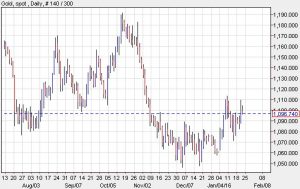
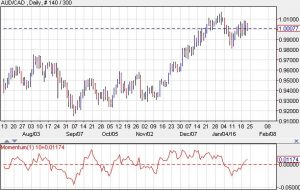
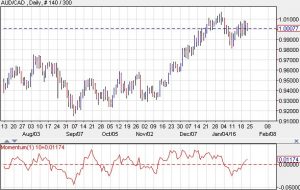
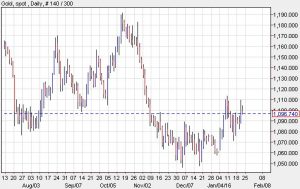
Traders know that AUDUSD cannot trade differently to gold, at least not for too long. Gold will always set the trend, for as long as Australia remains a key gold exporter.


Best CFD Tips Win out

Some CFD tips for commodities really do win out over any other trading tips seen in other instruments. For example, the linearity and flexibility of CFDs far exceed that of Futures and Options. At the same time, they come with ease of use, simplicity and inspire confidence in the trader. Most CFD trading platforms are easy to use, as opposed to the ultra complicated Option trading platforms, where complexity can never be removed and very few can understand and track instrument pricing. Investing in foreign currency through CFDs is also a good idea, for long term objectives. And even more so in commodity currencies where the trader will have an advantage through knowledge of trend in the underlying commodity. This single tip is among the most powerful tips that all CFD commodity traders ever learn, or figure out on their own as they gather experience. Commodity currencies help set rock solid trends in correlated currencies, and this helps avoid all kinds of nonsensical technical signals that show up on other related market charts. Price will always follow the trend of the underlying commodity, and all conflicting signals will be wrong, it’s that simple.

What is Online Trading Seen as

Many people wonder what is online trading and how they can get involved in trading. The general misconception is that of easy work and massive profit potential.

What is Online Trading Seen as

Many people who don’t really understand what is online trading,are under the impression that it is either too easy, or too risky, and that it is an endeavor for a select few. Those falling victims of the marketing hype by various vendors, tend to believe in the lure of easy and big effortless profits, promised by online trading. Trading online however is a very generic and inclusive endeavor, which covers all of the above conflicting notions. The fact that something has become easier to do, simply means easier for anyone to do, and this also means that making mistakes has become easier. The lure of easy money always appeals to people, and rightly so, since everyone is looking for the next hot opportunity to make money. Some people are greedy and ambitious, very ambitious, but manage to maintain a hold on reality through their cynical thinking. These are the people most likely to take risks, and still succeed at whatever they choose to do. So these are the people that are most likely to succeed in any kind of trading, including the more promising online CFD trading. CFDs offer more for the money, to all expert traders, but also to wise new traders, who are quick to figure out the benefits and use them to their advantage. Trading over the internet has always been seen in various ways, as ether bad or good, or even as a very complicated investing tool, for sophisticated investment bankers.

What is Online Trading
Wise traders know that they will have to gain some kind of edge, over the average trader out there, in order to succeed.


What is Online Trading to the Average Ambitious Entrepreneur

Most wise entrepreneurs know what is online trading all about, and approach it with caution, yet in a positive way. Most successful entrepreneurs are by nature cynical people, but also positive thinking people where solving problems and challenges has become second nature to them. They know that if there is profit potential in any business, it is because some risks are preventing others from grabbing the opportunity, and the profits. So they welcome risk, as something positive. Trading CFD contracts is somewhat more interesting than other contracts available for trading the financial markets. And wise entrepreneurs always like a little complexity and flexibility, as opposed to having none. The stock market for example, in its classic way of investing, doesn’t appeal to many people, because it’s all about buying, and holding stocks for a long time. Sophisticated trading changes all that, by offering much more flexibility, at risks which can be calculated and kept under control. What’s more, wise entrepreneurs know how to embrace risks in general, they know that all business ideas carry risks. And to be successful, even in classic business, they will have to gain some kind of edge over their competition. In other words, they will have to do some work and put their minds to it, to grab those profits that trading promises.

Relying on a CFD Trading Guide

Beginner traders have a lot to learn, a CFD trading guide offers them valuable guidance and basic advice for making their first trades in the commodity markets.

Using a CFD Trading Guide from the Beginning

Using a CFD trading guide can enhance the trading of any beginner trader, especially in the commodities markets where each market comes with its own requirements. Successful currency trading, as well as commodity trading relies on knowing these markets and specifically knowing the balance between supply and demand. Most currencies and even commodity currencies are volatile and hard to trade, whereas commodities themselves come with other risks, but some commodities at least are easier for beginner traders to start trading. Especially agricultural and energy commodities, because they tend to trade in a technical way, strongly adhering to the principles of technical analysis. Most simple CFD guides, help traders find the market of their choice, based on what they find most attractive to trade, and their understanding of these markets. Many traders are also directly or indirectly involved in the underlying industries. So a soybeans or corn CFD trader may actually be also a producer of these commodities, or be somehow involved in the physical trading of these commodities. Dealing with the real thing enables many traders to have first hand experience of the market’s inner workings and principles. So they understand seasonal trends, the impact of the weather and so on. Even speculators who have never seen the real thing in commodities, do research which does go all the way down to the farmer’s field. Because that’s the best way to get a sense of the balance between supply and demand.

CFD Trading Guide
Traders find it fashionable to trade precious metals and gold. But actually the real gold lies with agricultural commodities, because these have more pure trends. As they are not distorted by inflation hedgers and other investors.


A CFD Trading Guide is about Being a Specialist

As with all markets and commodities, one has to be a specialist to really understand what is going on. A good CFD trading guide should always be specific, and as new traders are better off starting with some commodities, that guide should be commodity specific as well. Many traders don’t know what is CFD trading, and what benefits exactly it brings with it. Trading CFD contracts goes far and beyond than just high leverage and affordable trading. Especially in commodities, it offers so much more that it is like the Swiss army knife of trading! CFDs offer linear hedging, one way liquidity, tax benefits, and a window to new opportunities that would have been otherwise impossible or too costly to gain access to. Which is why all wise commodity traders trade through CFDs. Some agricultural commodity traders, such as sugar and corn traders specifically, have sometimes made well calculated long term trades, where they made millions of dollars. All through combining commodity expertise and inter-market research. These were trades that are hard to find, they require a lot of imagination and original thinking, since they do not repeat themselves. But they do happen. A trend in sugar for example may be determined by other food and energy commodities, because sugar is actually both. The nice thing about these well selected trends is that they are very solid, and the probability of gaining money is way larger than the risk of ever losing money.

Developing a CFD Trading System

A good CFD trading system requires good knowledge of the markets targeted. Generic systems also are possible, for trading many markets, but efficiency is poor.

Developing a CFD Trading System for Efficient Trading

A good and efficient CFD trading system requires significant effort and experience to put together. The most difficult challenge is dealing with market volatility, money management, and overall risk management for account survivability. It all looks good in theory, and many new traders, as well as coders attempt to create automated or semi-automated trading software to trade some markets. It all looks solid in theory, there is a lot of back testing involved. During testing the software seems to handle most of the challenges just fine, resulting in a positive equity curve. The problems arise when the user of that software trades with real money, and volatility has changed in the underlying markets. That’s when things start to go wrong, and is all because of the factor of compound interest. Even tiny, badly timed, changes of the variable which determines trading size, can result in massive changes in the profitability of that trading system. And because there is real money involved, the user starts interfering as well, ultimately making things worse. Many trading system developers, and especially coders, do not understand what is CFD trading, nor the volatility of the underlying markets. Even though there are mathematical models for dealing with volatility, risk and uncertainty. The complexity of such a well-modelled and well-tested trading system would be prohibitively expensive, and nobody would buy such a system. And if a trading system is fully manual, and no computer programs are involved, then it might be successful. But it will only be suitable for its creators, and it will have no commercial value.

CFD Trading System
Traders and coders use all kinds of indicators to measure volatility, momentum, and so much more. But if one fails to take into account rates of change, maximum allowed risk and other risk variables, their trading system will fail at some point.


Developing a Semi- Automated CFD Trading System

A good semi-automated CFD trading system attempt to get the best of both worlds, both automation and manual trading. Trading CFD contracts through such a system can be quite an experience, and there are actually traders who bring in automation to their trading through third party coders. But automation is limited, and only as much as routine tasks, calculations, and mathematical risk models require. Such traders use various CFD trading platforms, where trades can be executed fast, and they remain in control at all times. Their semi-automated trading system only produces signals and recommendations, which may or may not be valid. It is always down to the trader to decide. The automation however helps save time on routine tasks, and concentrate on the non routine, challenging tasks. That’s where one has to exercise judgement and think originally. That’s what computers and even advanced mathematical models cannot do. Generally, it is a bad practice to rely too much on coders for solving trading related matters, because all coders do is write programs. They lack trading experience and even in-depth mathematics for designing any unusual trading system. And most of them are involved in making simple programs for the mass market of amateur traders. Some of whom are good amateurs, but still not good enough to model market risks so well, so as to ensure account survivability at all times. The problem around volatility and variable trading size is so huge, that nobody has ever found some rule of thumb. Your trading system can look deceptively good, and pass through extensive back testing, and yet it can still fail next month! All because that month brought some peculiar changes in those variables, that the back testing didn’t have.