All Quiet on the Western Front: Financial Markets seem to ignore the geopolitical tensions for now

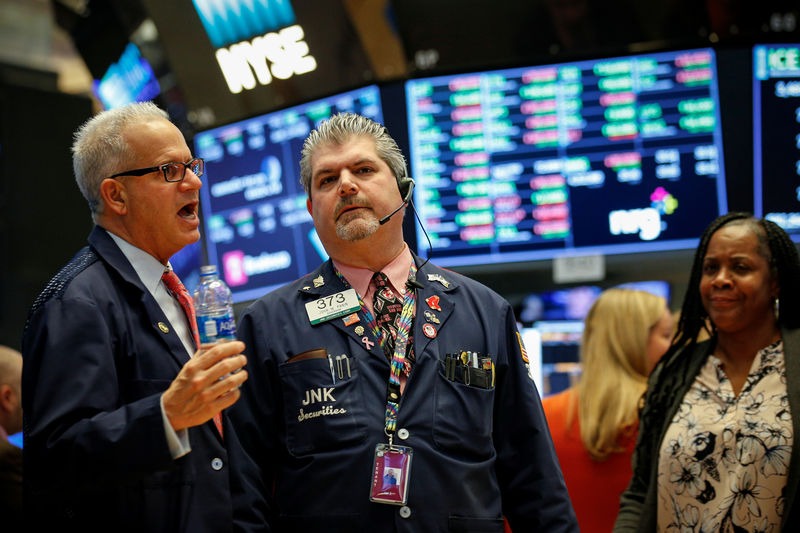
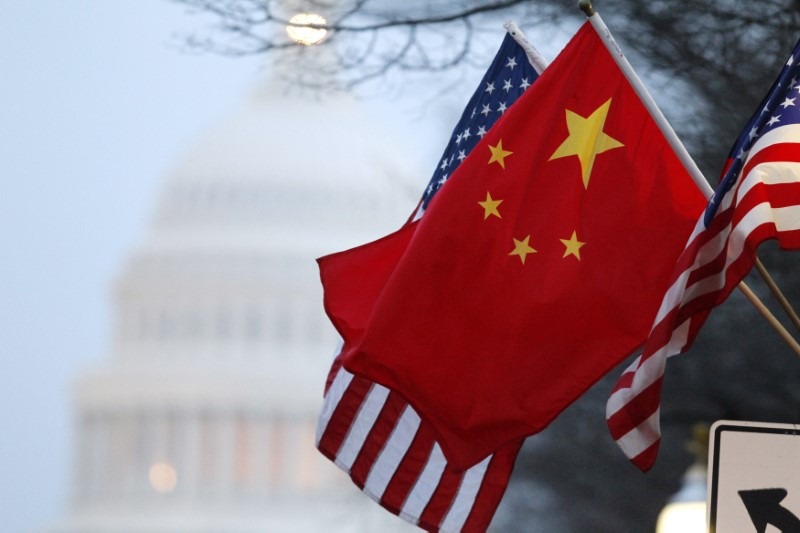
The US-led military strike against Syria’s alleged chemical arms infrastructure was a one-time move according to the UK Foreign Secretary Boris Johnson even as the US signaled it’s ready to punish the Middle Eastern country again if it keeps using banned weapons. The announcement made seems to be highly pro-market oriented, as western leaders do realise that actions against Syria might seriously shock the markets especially the commodities ones.

For now, traditional risk markets left unmoved but worries persist as US likely to ramp up Russian sanctions. The lack of a flight to safety is most apparent on short-dated US government debt, where sustained selling took the yield on the 2-year Treasury to its highest since September 2008, at 2.3867%.

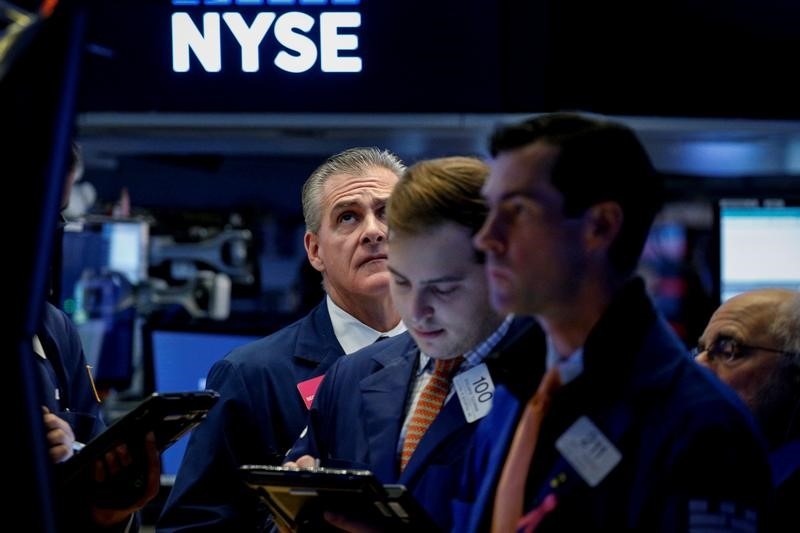
European bourses are holding their ground after a steady showing in much of Asia and investors are not moving into haven assets, in a measured market response to the weekend’s US-led military strikes against Syria. European equity markets opened flat to +0.25%, traditional safe haven currencies the JPY and CHF were little changed while oil edged lower after last week’s bullish surge. European macro-calendar is empty on Monday shifting focus on sentiment and the US retail sales data due on Monday afternoon.

The conclusion in general: The US-led military intervention in Syria did not yet spur any massive currency market reaction as it is seen as being unilateral and once-off action. Oil prices are coming off last week’s three-year highs as investors hope that the conflict will not escalate.

Russia: Russian assets are looking exposed on expectations of sanctions from Washington on Moscow, where President Vladimir Putin remains an ally of Syrian leader Bashar al-Assad.

The rouble is weaker by a further 1.5% to Rbs 62.9930 per dollar, leaving it around last week’s intraday nadir of Rbs 65 — a level it previously traded at in late 2016.

Sources:

https://www.ft.com/content/5c993d18-4116-11e8-93cf-67ac3a6482fd

https://www.investing.com/news/stock-market-news/european-shares-steady-after-usled-strike-on-syria-wpp-falls-1395715

https://www.fxstreet.com/analysis/european-fx-outlook-life-after-striking-syria-sees-us-dollar-little-changed-201804160557

https://www.dailyfx.com/forex/market_alert/2018/04/16/Markets-Brush-Off-Geopolitics-Gold-Nears-Strong-Support.html

 

Mark Zuckerberg’s conference call with reporters aims to calm down the markets

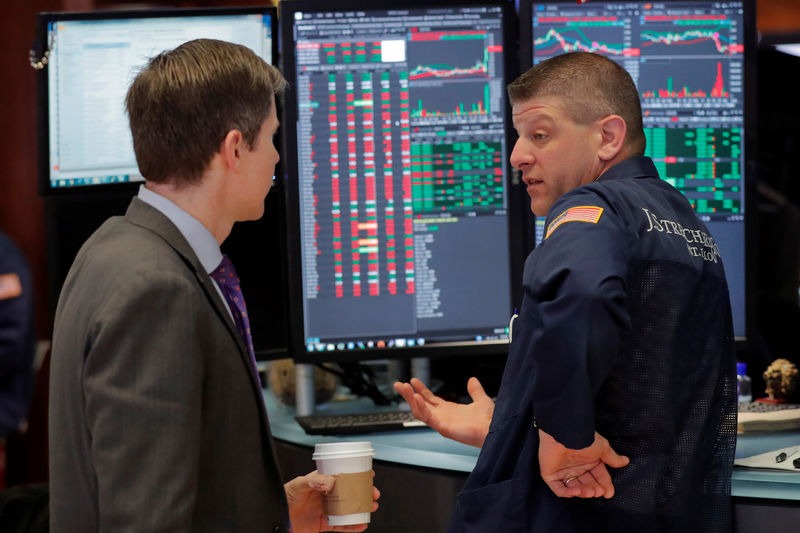
Shares of Facebook (NASDAQ:FB) gained around 2% in pre-market trading on
Thursday, after CEO Mark Zuckerberg held a conference call with reporters after the prior session’s close. Facebook CEO says he remains right person to lead company despite privacy scandal. “When you’re building something like Facebook that is unprecedented in the world, there are going to be things that you mess up,”
Zuckerberg said, adding that the important thing was to learn from
mistakes.

Shares in Facebook closed down 0.6% on Wednesday to $155.10. They have tumbled more than 16% since the Cambridge Analytica scandal broke. Other tech companies have improved their standing for a bit: Facebook (O:FB), Amazon (O:AMZN), Alphabet (O:GOOGL), Netflix (O:NFLX) – collectively known as the “FANG” group – were up between 1% and 3%.

“Knowing what I know today, clearly we should have done more,” said CEO of Facebook.

Facebook was taking steps to restrict which personal data is available to third-party app developers, he said, and it might take two more years to fix Facebook’s problems.

Sources: 

https://www.ft.com/content/eacc29fa-38b6-11e8-8eee-e06bde01c544

https://www.investing.com/news/economy-news/top-5-things-to-know-in-the-market-on-thursday-1379422

https://www.investing.com/news/technology-news/facebook-to-revise-terms-of-service-to-include-more-privacy-language-1378160


Forex pairs market: USD rebounds on signs of Trump flexibility

While stock markets have experienced volatility of late, in part due to trade tariff fears, currencies have taken more of a wait and see approach. The dollar appears to be rewarding the patience this morning as it makes gains on reports that the White House will be more flexible than previously thought on US-China tariff negotiations.

The dollar pairs are generally lower, with the AUD/USD and NZD/USD reversing the majority of yesterday’s gains. The EUR/USD and GBP/USD remain range bounded, with moderate losses on both pairs. EUR/USD remains under pressure within a tight range with USD slightly bid against the backdrop of rising US yields. Final Services PMIs in Euroland, US trade balance next on tap.

The EUR/GBP has stabilised, with the pair making small gains in favour of the euro this morning. The Canadian dollar is reversing some of its recent NAFTA inspired gains, with the USD/CAD slipping lower for the first time in a few sessions. The yen pairs are lifting off the lows, making gains for the third day in a row.

Japan’s Nikkei (N225) ended 1.5 percent higher. Markets in mainland China, Hong Kong and Taiwan were closed for the Tomb Sweeping Day holiday on Thursday.
U.S. S&P 500 mini futures (ESc1) rose 0.5 percent, with Wall Street set to extend Wednesday’s rebound.

Proposed 25 percent U.S. tariffs on some 1,300 industrial technology, transport and medical products from China will be subject to a public comment and consultation period that is expected to last around two months.

Market moving news today: UK services PMI at 09.30, Canadian trade balance is at 13.30, US unemployment claims and at 18.00, we have FOMC member Bostic speaking. All times are London times.

Sources: 

https://www.dailyfx.com/market-news?ref=TopNav

https://www.fxstreet.com/news/eur-usd-challenges-session-lows-near-12270-201804050520

https://www.ft.com/news-feed


Market casualties grow as China-US trade hostilities unleash havoc on markets

China’s planned retaliation to the string of tariffs imposed by the US hit global markets on Wednesday, knocking everything from German stocks to soyabeans, as the spectre of a trade war intensified. U.S. automakers, aero companies, grain merchants and chipmakers were the early casualties. Shares in Boeing, the biggest US exporter by value, dropped 4.6% in pre-market trading in New York.

The speed with which the trade spat between Washington and Beijing is ratcheting up – the Chinese government took less than 11 hours to respond with its own measures – led to a sharp sell-off in global stock markets and commodities. China levied 25% additional tariffs on U.S. goods earlier in the day. But unlike Washington’s list that covers many obscure industrial items, Beijing’s covers 106 key U.S. imports including soybeans, planes, cars, and chemicals.

China is Boeing’s biggest export market and the 737 is its biggest selling product. The company said in a statement in November 2017 that it planned to deliver nearly 100 737 MAXs to Chinese airlines before the end of this year. Now, the difficulties arise.

Among the casualties: Automakers Ford (N:F), General Motors (N:GM), Fiat Chrysler (N:FCAU) and Tesla (O:TSLA) fell between 2.3% and 4.4%. Grain merchant Archer Daniels (N:ADM) was down 3.3%, while Bunge (N:BG) slipped 2.2%.

The oil price was also swept up in the wider fears about what deepening trade tension mean for global growth. Brent crude, the international benchmark, fell 1.2 per cent to $67.32 a barrel while US marker West Texas Intermediate declined 1.5 per cent to $62.39 a barrel

Sources: 

https://www.ft.com/content/e8959f94-37e0-11e8-8b98-2f31af407cc8

https://www.ft.com/content/73ddbe62-37e4-11e8-8b98-2f31af407cc8

https://www.investing.com/news/stock-market-news/boeing-ford-lead-list-of-casualties-in-chinaus-trade-spat-1377132


Dollar weakens again on tariff details releases

Markets situation:

  • Wall Street futures point to losses of over 1% for major indices
  • Hong Kong’s Hang Seng and Seoul’s Kospi stand out with notable falls
  • Frankfurt’s export-heavy Xetra Dax hit as trade dispute unnerves investors
  • China applies 25% tariff to 106 US products
  • Trump’s new tariffs applied to 1,333 Chinese products
  • Dollar slips having held its ground before Beijing’s response
  • US corn and soyabean futures down almost 3% after inclusion on China’s list

It has been a hard day’s night for Dollar, recalling famous Beatles song. This morning, the US dollar remains weak as the Trump administration revealed trade tariffs that are wider ranging than previously thought. Market reaction has been relatively muted, but the underlying trend remains pressure on the dollar. Basically, China hit back at the Trump administration’s plan to slap tariffs on $50 billion in Chinese goods, retaliating with a list of similar duties on key U.S. imports including soybeans, planes, cars, whiskey and chemicals.

Tough hit for republican administration which is already under pressure from tech stock market woes. The dollar slumped against the Japanese yen, as safe haven demand was boosted by these escalating trade tensions. USD/JPY was down nearly 0.4% to 106.15, after sliding to an overnight low of 105.69.

The U.S. dollar index, which measures the greenback’s strength against a trade-weighted basket of six major currencies, dipped 0.2% to 89.69.

In the bond market, the U.S. 10-year Treasury yield inched down to 2.770%.

Looking ahead, the highlight of Wednesday’s economic calendar will be the ADP jobs report at 8:15AM ET (1215GMT). Expectations are 208,000 private jobs were created in March.

Today`s market movers are: UK construction PMI at 09.30, European CPI flash estimates at 10.00, US ADP non-manufacturing PMI is at 15.00, US crude oil inventories are at 15.30, FOMC member Mester speaks at 16.00. All times are London times, of course.

Sources:

https://www.ft.com/content/fa91a692-3796-11e8-8eee-e06bde01c544

https://www.investing.com/news/economy-news/top-5-things-to-know-in-the-market-on-wednesday-1376930

https://www.fxstreet.com/news?utm_expid=.fMQX43R4Q9Op9hQ4nekQ9w.0&utm_referrer=https%3A%2F%2Fwww.fxstreet.com%2Ft%2Fh


Main issues markets deliver late on Tuesday, 3rd of April 2018

After U.S. stocks closed with their worst start for April since 1929, futures pointed to a slight bounce in opening trade on Tuesday. And that is a slight relief, we shall say. As we know Wall Street shares plunged on Monday as investors fled technology stocks amid resurgent trade war worries, setting the tone for global equities…

On a side note, fears of an all-out trade war between China and the U.S. continued to center investors’ attention. U.S. President Donald Trump is expected this week to release list of Chinese imports targeted for U.S. tariffs to punish Beijing over technology transfer policies, a move expected to further intensify the strain between two countries.

U.S. tariffs on $50 billion to $60 billion worth of annual imports is expected to be levied on products benefiting from Beijing’s “Made in China 2025” industrial development program, but it may be more than two months before the import curbs take effect, administration officials have said.

The U.S. Trade Representative’s office needs to unveil the list of products by Friday under President Donald Trump’s China tariff proclamation signed on March 22.

Dollar feels this “pain” and dollar index slipped 0.04% at 89.65. With no major economic reports on Tuesday’s calendar, markets will pay close attention to comments from a couple of Federal Reserve speakers for insights into the outlook for monetary policy

On commodity markets main issue is Oil prices which are slightly up on Tuesday amid a potential slowdown in U.S. production. But prices were capped by rising Russian output and expectations of a reduction in Saudi Arabian crude prices. Most likely Russia is trying to suck up more cash from oil markets enlarging its cash reserves while fighting budgetary scrutiny under western sanctions.

On stock news: beloved Spotify was set the reference price by the New York Stock Exchange for its shares of at $132, ahead of Direct IPO Listing. We shall see how this plays out, as 2017 was a bit less interesting from IPOs perspective. Spotify is based in Sweden. Arguably, it’s the second most well-known Swedish company after IKEA. Spotify has been around since 2008 so it’s not exactly a start-up. Private valuations for the company are as high as $20 billion.

Sources:

https://www.investing.com/analysis/blog-traffic-picks-up-as-bears-take-control-200302543

https://www.investing.com/news/economy-news/china-imposed-tariffs-on-us-products-to-balance-losses-state-media-1374900

https://www.investing.com/news/economy-news/trump-to-unveil-china-tariff-list-this-week-targeting-tech-goods-1372710

https://www.investing.com/news/commodities-news/oil-inches-forward-despite-increased-russian-production-1375123

https://www.investing.com/quotes/us-dollar-index

https://www.investing.com/analysis/here-come-the-unicorns-part-ii-spotify-opts-for-direct-listing-200299556

https://www.ft.com/content/aa461838-3716-11e8-8eee-e06bde01c544

https://www.fxstreet.com/currencies/eurusd