Trading on Live Forex Signals

Even though all wise traders keep an open mind on their strategies, and break or bend all the rules, trading on live forex signals puts a lot of pressure on the trader. So limitations have to be imposed, through the use of rigid rules and discipline. Day trading forex live, or just having to act there and then, as soon as the signal appears, does require extremely sharp focus. What discipline offers to these fast-acting traders, is exactly the ability to stay focused. This is why all martial arts rely so much on discipline. Because there’s little time to think and react. Traders acting on live forex signals are still allowed to break rules relating to their strategy, but only in advance, before the trading session starts. During the actual trading session staying focused is their one and only priority, because there is no time to think. More experienced traders have developed methods for dealing with extreme volatility and fast moving markets, and specifically for assessing their day-trades, once they have been placed. If the time available to them is anything form a few minutes to half-an-hour, that is long enough to let the trade prove itself, and then apply their assessment methods. Some day traders apply time limits on their trades. So that if the trade is taking too long, and more than 30 minutes to become somewhat profitable, it is seen as a doomed trade, bound to become a loser. So such trades are closed past the 30 minute limit, regardless of profitability. Other day traders go further, and devise methods for actually reversing trades that they believe they are bound to become losers. And these methods can help traders be better prepared, no matter what happens next. The basic idea is that probability of success in day trading can be estimated in a matter of 30 minutes, as long as the trade entry criteria are valid.

Learn Live Forex Signals
If probability theory specialists were to develop a martial art, it would be just like the disciplined traditional martial arts found in Asian countries. It’s all about optimal movements of defense and offense, under the constraint of time, where the user doesn’t have time to think, — it’s all second nature to them. Successful day trading is based on probability too, and because of time restrictions, discipline is necessary, in order to make things work so that probability is on the traders’ side.

Live Forex Signals and Volatility

Volatility can produce false live forex signals, or just ruin signals that would otherwise have been good. Forex trading signals are often misleading or lack conviction. Because day traders don’t pay attention to momentum and volatility. Momentum can be identified through various indicators and LSS pivots. Volatility can be estimated based on the expectation of news release days. Typically, a currency pair will trade with limited volatility on the days and hours leading up to an economic report release time. And volatility will increase dramatically right after the release time. By paying attention to all these indications, traders can customize their strategies. A volatility-specific day trading strategy will work much better than a primitive strategy. Where all days are considered to have the same amount of volatility. All this forex trading info should be taken into account by traders, and this could allow them to handle their trading signals much better. It is worth mentioning that seemingly minor factors, such as volatility or LSS pivots, can have a huge impact. When all these different pieces of information are combined in a balanced way, trading can be enhanced dramatically. This is all because trading works on probability, and in probability theory even a seemingly minor factor can change the net result by as much as 30%. This is evident in games of thought, such as poker, where the player gains a seemingly small advantage, say 1.5% if they play some hands in a specific way. 1.5% may sound too small, but together with good money management it can have a huge positive impact on the player’s goals. In trading too, probability is in control, and traders can achieve order out of chaos. Small increases in probability of success result in huge increase in end profitability. Probability is also the basis for all sophisticated stock valuation models. And for assessing risk. Probability is carefully measured by all successful investment banks, and no number is too small or irrelevant to their analysis.

Safe Currency Trading Strategies

All currency trading strategies which have high tolerance of trading mistakes, and offer flexibility, are considered to be robust. There is always market risk involved, but the trader is not forced to make quick, impulse decisions. So by this definition one can develop safe currency trading strategies. Based on any low frequency strategy, one that tolerates volatility. Most traders who lose money trading forex, do so because they tend to trade at very high frequency, and to chase volatility too much. They also tend to have a strong belief in the idea that market price is always right — which is not true. Safe currency trading strategies cannot be very profitable, exactly because a huge portion of price fluctuation is missed, but that is precisely the concept. By avoiding much of the volatility, a lot of opportunities are missed, but a much greater portion of risk is also avoided. Slow traders take things lightly, and wait for a few good opportunities, so as to trade only through those well-selected opportunities. This naturally implies that they could always trade at much larger size, than they otherwise would. And this is perfectly safe, as long as the strategy is safe enough. And as always, extra security is provided by evaluating open losing trades in their early stage. This evaluation allows for losing trades to be closed early. It allows for other, less clear trades, to be hedged with an opposite trade, hence locking the open loss. And with other even more complicated trades, it allows the trader to assess each one of these trades over a period of days, not minutes or hours. Therefore the pressure to make fast and bad decisions is removed.

Learn Currency Trading Strategies
The feeling of safety is great as it helps reduce stress and evaluate trading decisions in a very realistic way. And to really be safe, traders should abandon the idea that market price is always right, because it isn’t always right!

What Makes Safe Currency Trading Strategies even Safer

Safe currency trading strategies can be made safer still. Simply by looking at the causes of false signals in the market. The effective way to do this, is to focus on the daily chart of the currency pair in question, and to do classic analysis. Simple swing point analysis and few chart patterns, when used in detail, can make up a complete powerful technical analysis method. A method for evaluating various signals, market moves, and of course open losing trades. These are all evaluation methods that the day trader doesn’t have. But the safe, longer term forex trader does have. Investing in foreign currency is part of safe, low volatility forex trading. Because the trader maintains an investor’s mindset, rather than a trader’s. The only difference is that they still trade with leverage, and use contingent orders. But as long as the flexibility is large enough, the trading strategy will work just like stress-free investing. The hidden power of the daily chart and its analytical insights are amazing. This is because the period of the markets is the day itself. Safe traders take chart analysis seriously, but they take their own trading lightly. There is nothing wrong trading various currency pairs, and doing appropriate analysis on each one, analysis that goes beyond the generic methods. This approach is appropriate as each currency pair is actually different, compared to other correlated pairs. Intermarket analysis is often good, but is not the holy grail. As it is possible for a minority of markets to lead the new trend, and for the majority of other correlated markets to be lagging behind. Many foreign exchange currency symbols look a lot alike, as often do their charts, as they are crosses of the same underlying currency. And generic analysis methods fail miserably from time to time, exactly because they fail to deal with the unique aspects of each currency pair that these symbols represent.

Advantages and Future of Automated Forex Trading

Automated forex trading has limited practical use in today’s markets. Nonetheless, it can deal nicely with some routine trading tasks and off-hours trading.

Beneficial Applications of Automated Forex Trading

Automated forex trading is characterized by low profitability and an overall inherent instability, which prevents it from becoming more profitable. As soon as the user pushes for more profit, by changing the parameters, stability is lost. And ultimately, profitability is short lived once these parameters have been pushed too far. All in all, automated forex trading is no match for manual trading — not by a long short. There are however very specific online trading situations wherein such software-based trading provides a solution. These specific trading needs have to do with off-hours trading, and very strict criteria trades, both of which are too resource-intensive for a human trader to handle. Traders who use automation successfully, and in a stable way, are specialist traders. They do a lot of manual work, working through many charts and markets. And only a handful of limited periods of time are handed over to automated trading. The hard work has already been done prior to allowing the software to trade. The whole purpose of using this software, is to save time. Or to execute very specific trades, where contingent orders have to be of very specific size. Trading software can stand guard for many hours, and only execute the trade in question if and only if the strict criteria are met. This is often the case during major trend reversals and expected market moves. But beyond these applications, automation has failed to deliver superior results.

 Automated Forex Trading
Quantum computing will definitely take many systems out of the stone age and into a new powerful future. Automated trading will surely be one of those. It is unlikely that it will help pattern recognition science beat the markets. Certainly it will not happen through any commercially available products. But we may see great possibilities whereby wise traders will set these systems in motion, and will only sporadically readjust parameters; All this in contrast to today’s primitive automated trading systems.

High Frequency Automated Forex Trading

High frequency automated forex trading is a more realistic possibility, but it still is in its infancy. Developers of any such successful and stable trading systems are unlikely to make them available for sale. Such high frequency trading still suffers from changes in market volatility. Which just like in the case of scalping end up causing very large losses when they happen. Day trading forex live through a high frequency, automated approach is a realistic possibility. Developers however lack the analytical skills required to model volatility and other risk factors, in a mathematical way. And as with all algorithms, if the theory is not correct the software end-product will not work well either. Software products such as forex robots are capable of winning forex trading competitions and producing large profits. But success is short-lived. And after several weeks the algorithm starts to fail miserably. And it even risks losing big money. If a forex robot was very good. And it only needed manual parameter adjustment about once a week, it could keep on working well. But this parameter adjustment would be so complicated and very few clients could possibly handle it. So is trading online made easy by automation? The answer is, YES, but only in very specific circumstances. Mathematicians on the other hand believe that the supercomputers of the future, relying on quantum processors, will generate impressive results. They will be able to run high frequency trading software much better. And parameters may only need to be occasionally tweaked, by data algorithmiscists.. These systems will still fail at some point, but they will have much longer winning streaks than today’s systems. It remains to be seen how the mathematics of pattern recognition will benefit from quantum computing.

Learning Online Currency Trading from Veteran Traders

Learning online currency trading is a very time consuming process. The learning curve can be cut shorter only through the guidance of some wise veteran traders.

Learning Online Currency Trading Based on Confidence

Learning online currency trading has to be based on confidence. Because too many negative thinkers will try to discourage you from pursuing your goals in trading. Trading is risky, and everyone has acquaintances who lost money trading. But very few know someone who made very good money trading in the forex market. That’s why so many negative thinkers exist. Confidence however can still be found among veteran traders, since these traders possess a demonstrated relevant skill set. And with an opportunity to see veteran traders in action, all doubts about trading viability recede. This proof that it is actually possible to beat the markets, dispels the negative thinkers are not absolutely right. Learning online currency trading becomes much more interesting when there is guidance provided by proven veterans. Any trading online course or seminar will be much more interesting to attend and learn from. Experience is priceless, and the mere guidance that veterans can provide is amazing. Even if they are not officially teaching, themselves. Official teaching by veteran traders is unlikely to contain their biggest trading tips. Especially seminars, which usually contain techniques and tips which address the whole picture of their trading strategy. Veterans will not share their best secrets, but even the tips they do share are still very valuable and insightful. All of these tips can be implemented on many markets, and on any currency trading account. Confidence is the most important personality trait of any trader in the making. It is important to be confident every day of the week, even during the worst phases of the learning curve, where many traders quit.

Learning Online Currency Trading
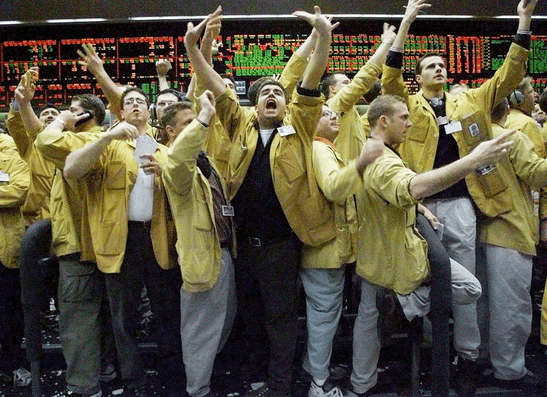
Many veteran traders are former floor traders, who worked here and there before finally becoming independent traders. They have a good understanding of swing point analysis, and of the daily charts on any market. Because all floor traders do a lot of homework on these charts before going on to trade.  Anyone who lasted for more than one year on the trading floor without blowing their account, is a veteran. Those having decades of experience are even more capable of beating the markets. So learning from these people is really priceless.

Learning Online Currency Trading Tips from the Veterans

Learning online currency trading tips from wise veterans directly, is a much better way to propel your trading ahead. Traders need to learn on two fronts. First on methods for identifying false signals and market moves. And secondly on identifying which elements of classic analysis do not really work, and to stop wasting time with them. By allocating more time on the techniques which do work, traders will end up reaching their objectives faster. The confidence gained in just a few profitable trades, based on correct judgment of the market, is really priceless. And this confidence encourages traders to continue their efforts, until the tipping point has been reached. Once past the tipping point successful trading becomes almost routine. There are losing and winning trades, but profits are bigger than losses. The fact that there are losing trades means that the trading strategy is a stable one (be suspicious of long winning streaks). And the fact that the trading account is profitable overall. Means that the strategy itself is viable, and profitable in the long run. CFD trading strategies can be cleverly integrated into any underlying strategy derived from the tips of the veterans too. The veterans may not be familiar with CFDs, but the tips work on the same markets. So combining these tips with the benefits of CFDs can bring new advantages into trading, which the veterans could never have dreamed of. Veterans however who are familiar with CFDs may have figured out even more creative trading methods. Especially veterans who have long experience as independent traders, not working as part of a team. These traders have secrets and tips which no one else has yet discovered.

Online Trading Accounts – Globalizing Market Opportunities

The emergence of online trading accounts in the 21st century’s second decade as the definitive marketplace for price determination is a profound development. Global citizenry has taken on a new meaning when the only requirement to participate in the ultimate commercial activity is a browser and an internet connection.Furthermore the nature of markets has evolved as advances in communication and computing technology have facilitated the rise of new trading platforms and modalities.

This article will review the relevant developments in general and how they have affected online trading accounts in the following countries:

Online Trading Accounts Development

As far back as 1969, with the establishment of the electronic communications networks (ECNs), digital trading systems became a reality for U.S. brokerages to in-house broadcast stock bid and ask prices. Over the following score of years as technology – particularly software – progressed, brokerage firms singularly and in association iteratively refined the process of matching share traders with current price data, thereby increasing the efficiency of of the buy – sell process and introducing dramatic matching up buyers with sellers easily and efficiently and with significant cost savings. Yet, the model and paradigm of client – broker – market principal remained unaltered.

With the dawn of the internet in the mid-1990’s the situation underwent dramatic transformation / democratization as smaller players, both brokers and investors, gained access to and ability to trade on the same information previously available only to market principals. As the technology permeated the marketplace, the number of online brokerages increased from 12 in 1994 to more than 140 by the end of 2000.

In parallel, the better market access for individuals spawned an entirely new career class, day traders, who introduced unprecedented levels of breadth, interest and volatility to the equity markets of the late ’90s, along with an unprecedented dozen-year bull run.

This steady and continual influx of investors into the stock purchases during the 1990s helped to create a very strong bull run (1988 through 2001). The mania pervading the dot com bubble was an additional element in the technology takeover.  All this interest and nascent technology and computing power encouraged new paradigms and disruptive processes.

UK trading account

While throughout their 200+ year competition, the New York Stock Exchange was more innovative than its London Stock Exchange (LSE) rival, at the dawn of the 21st century, LSE members began offering over-the-counter online trading accounts for Contracts for Demand (CFD) as a way for hedge funds and institutional traders to cost-effectively hedge their equity-risk exposure in a manner both leveraged and exempt for UK stamp duty tax.

Around 1998, CFDs became available to retail investors, providing all UK trading accounts with similar benefits.  Approximately a decade later, as a result of insider information cases, the UK Financial Services Authority (FSA) regulator imposed a CFD general disclosure regime. While CFDs on individual UK shares were the impetus for their creation, other financial asset instruments were also initiated and traded, like those on indices, many global stocks, commodities, bonds, and currencies. CFDs on indices of major exchanges quickly rose in volume to become the most popular.

Trading account Australia

In 2007 exchange-traded CFDs were launched in Australia, under the auspices of the Australian Securities Exchange(ASX). Trade began in the leading 50 Australian stocks, 8 Foreign Exchange pairs, global indices and a few commodities. What started with 12 brokers offering trading withered continuously until ASX cessation in June 2014.

The migration to off-exchange trade arose as proprietary platforms gained sophistication and liquidity, with bid-ask spread shrinking, innovative trading tools, and the increasingly robust internet-enabled features. The typical trading account Australia now features high end trading technology and a variety of asset classes.

Singapore trading account

The online trading experience in Singapore has also improved as the friendly pro-business environment, competitive instincts of the business community, and readiness to adopt new technologies has fostered a competitive non-nonsense trading regime.

“Virtual Singapore”, the online platform in which the unprecedented “Smart Nation” sensor big data is collected and analyzed, is an example of Singapore’s enlightened attitude to online data and cloud processing. The effort is expected to transcend the data silos which have typically limited reach and effect of other similar urban efforts to date.

Among the features found in a typical Singapore trading account are:

  • secure trading networks consisting of high end trading technology
  • comprehensive brokerage services for a broad range of traders and investors
  • instant deposit and withdrawals and outstanding customer service

Online trading South Africa

The online trading South Africa experience has mirrored the country’s political growth and maturation. Though a classic commodity-based currency, the South African Rand (ZAR) (18th most actively traded) still punches above the weight of South Africa’s economy (33rd largest), largely on the strength of the well-developed economy. Traders, largely in Johannesburg and Cape Town have come to expect tight spreads, the newest technologies, top tier liquidity, and first class 24/7-customer support. International, premium service available to retail and commercial clients include No-Dealing-Desk execution, spreads as low as .0 – 1 Pip and with less than 5 ms latency. Because of its long history at the margins of the British Empire, brokers and purveyors of platforms offer an array of tools, news and analysis so that clients can become familiar with the markets

Malaysia trading account

The Malaysian investment community, settled around the Kuala Lumpur Bursa Malaysia Stock Exchange has a well-developed legal structure and culture of trading securities, allowing it to evolve with markets and technologies. As such, online Malaysia trading accounts feature: quality Forex signals throughout the trading day, multiple platforms, innovative vision and technology, live chat support, low spreads, instant execution, no slippage and fast order processing

This summary has described the evolution of online trading accounts both technologically and in five specific countries. A review of the available features shows the effect of globalization in distributing benefits across borders.  Restrictions and limitations, at this moment of time when cloud computing and data storage dominate, have become a function of governmental restrictions either explicitly or through sanctions which support local brokerage services.