What is CFD Trading Best Used For

What is CFD trading and how it can benefit you as a trader. The key advantages of CFDs are found in efficiency and flexibility not in their leverage.

What is CFD Trading in a Nutshell

Leverage is offered today in many trading instruments, there is nothing magical about it. Many traders are still not fully aware of what is CFD trading and how it works. Basically CFDs are derivative financial instruments which allow you to profit from market movements, but without owning or committing to own (buy or sell) the underlying asset at any time. CFD online trading has become popular among seasoned traders who trade commodities and currencies, as well as stocks. As far as stocks are concerned, CFDs provide tax planning flexibility, the advantage of being able to short a stock at any time, as no short selling restrictions ever apply, and the advantage of liquidity.
Because of better, one way liquidity, trading is faster and more efficient through CFDs than it can be through any other instruments. The spot markets (Forex and Commodites), as well as the Futures markets suffer from inherent problems, they all can be dealt with, except the issue of liquidity. A forex trader trading the spot market can find themselves in poor liquidity conditions, but a CFD forex trader will always be able to trade fast and at normal or near normal speed. As long as one trades up to $100 per pip, in the forex market, which most traders do, going with CFDs is much better. The forex spot market has its own pros and cons, and some prefer to trade through advanced and more costly ECN brokers, but these are million dollar forex traders. When one trades at $100 per pip or less, it’s just as efficient but much more affordable to trade through CFDs. Stock traders too, unless one trades stocks with very large amounts of money, there is no reason not to trade through CFDs instead. Plus they will have the short selling advantage when short selling restrictions are imposed.
what is CFD trading
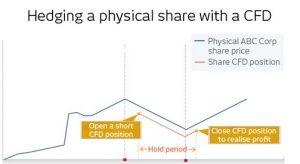
CFDs offer unique, ultra precise and affordable hedging opportunities which Futures cannot offer as pricing is not precise. Options can offer similar protection, but if one gets the volatility wrong, or the market fails to move much, then the trade goes wrong. Even though direction was predicted right. CFDs are simply unbeatable in 80% of hedging cases, even when compared to advanced Option trading! No wonder Option hedgers include CFDs in their complex trades.

Options VS CFDs

Options are complicated trading instruments for advanced hedging and neutral strategies. Options are good in some cases, where the trader knows what they are doing and trading is done efficiently. But Options require significant price movement, as well as knowing the volatility. The trader has to get both the market direction right, as well as the volatility. And as a result most new traders end up losing money even though they predict the market right. CFDs on the other hand are extremely efficient by themselves, if the trader makes a right prediction, no matter how small, they will make a profit right away. Many seasoned Options traders use CFDs in their complex strategies, combining both Options and CFDs, as opposed to using just Options, or Futures. So the question is what is CFD trading going to offer you as a small to medium size trader? It is going to offer you amazing trading efficiency, protection from adverse liquidity, and all the day to day liquidity you will ever need. CFDs protect from adverse spot market liquidity, just like a harbour protects ships from massive waves coming through from the ocean, but it still allows you to be in touch with the spot market indirectly, in a strongly favourable way. Liquidity is perfect for up to $100 per pip, in all currency pairs. Spot market forex traders are always at risk, because even the most liquid pair, such as EURUSD, can become illiquid during brief periods of time. CFD trading platforms are easy to use, and they make it possible to capture fast market movements just like you see them happening on your forex charts. The fact that seasoned stock Option traders use CFDs in their trading, instead of Futures or Stocks, speaks volumes. It is because CFDs provide the efficiency for fast, directional profiting which Options and Futures always lack.

Forex Broker Selection Does Matter!

Forex broker selection is often mistakenly based on free bonuses and commission costs. But the real issues in trading are best market price, and easy of use.

Forex Broker Selection Should Be Based on Trading Efficiency

Trading efficiency is determined by how easy it is to use a trading platform, and if certain trading tools are available. Anything that could make the trader make mistakes, such as entering the wrong number in a contingent order, or not being able to open and close trades fast enough, can be very costly. Then is of course the issue of liquidity, which only few good broker s can handle well when markets are themselves low on liquidity. Forex broker selection is therefore very important, and traders should not pay attention at all to free bonuses, deposit bonuses and offers, which bring no real value to the table. What brings value is trading efficiency. All forex strategies require accurate trade execution. What is forex trading expected to offer, if many trades are placed after long delays, and other already profitable trades cannot be closed fast enough, during critical times? Wise traders are wise enough to look past the marketing hype when choosing a broker, but even these traders can still choose a broker whose trading platform may be hard to use. The trading platform is just as important as liquidity is. Some brokers, in an effort to appear more innovative and better, use platforms which are actually harder to use, and factors such as leverage are not shown clearly enough, thereby confusing the trader.

forex broker
Stay away from brokers mentioned in magazines as having won their Broker of the Year Award! It’s deceptive marketing! All a trader needs is a CFD broker with a good history. Liquidity is perfect for up to $100 per pip, no delays, no nonsense! I had to learn the hard way to figure this out. Magazine awards don’t help provide liquidity or reduce latency times, good CFD brokers do!

Beware of So Called Magazine Award-Winning Brokers!

Other brokers suffer from long latency times, and trading becomes impossible during some hours. For example, it has been the case with a very popular UK based broker, where you actually closed a trade and not confirmation was received at all for several hours! This unbelievable blunder lasted for an entire day, where markets were moving fast, resulting in many clients suffering large unnecessary losses. I know first hand because I was one of those clients. I actually attempted to close a losing trade, no confirmation was displayed on the platform or received by email. I then mistakenly thought the losing trade was till open, because it appeared to be so. In my panic, I ended up opening 3 more new trades in the wrong direction, trying to close the original losing trade. The end result was $300 in losses, in what should have been a $50 losing trade. Confirmation was received many hours later at night, by email. Unbelievable! So beware of highly popular brokers, this one was an award winning forex broker! And proved to be so much below average. How to trade forex profitably, even with the best strategy when one uses such a broker? The above incident would never had happened to me had I been using a CFDs broker, anyone with a fairly good reputation. Magazine broker of the year awards are not necessary, thanks. In fact this just one more marketing technique that some large, but poorly designed brokers use.

How to Trade Forex Better

In order to learn how to trade forex better, one has to start with basic trading methods, and build upon these methods over time. Quick success isn’t possible.

How to Trade Forex Better than Most

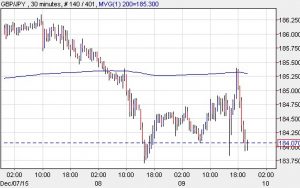
In order to learn how to trade forex better than the average trader out there, one has to persevere and not allow early losses and failures discourage them. All traders, even the most profitable ones still have losing trades, nobody can ever trade perfectly. Profitable trading boils down to effective use of forex charts and good selection of a forex broker. The simplest techniques one can apply on the currency pairs, when looking at those charts are techniques involving the 10 day and 200 bar moving averages. As well as various momentum and strength indicators. These tend to be wrong about half of the time if used exclusively on a single pair. So traders look for ways to improve the usage of these indicators through inter-market analysis, and the use of additional indicators. There are no magic indicators, at least not ones that are commercially available. All indicators and trading tools that come with a charting software package are already obsolete, but that doesn’t make them useless. A profitable trader with a lot of experience can still trade profitably even when given nothing but these obsolete indicators. This is because they know that these indicators (momentum based, moving averages, and volume indicators), will be wrong half the time. Even contrarian indicators tend to be wrong that often. Any indicator or software vendor promising ‘unfair trading advantages’ or proprietary analysis, is bound to fail sooner or later, in real life trading. Forex robots belong in that category as well, they always fail eventually. In fact, complete automation has failed in all aspects of life, where the task is non routine. That’s why automation cannot replace pilots, translators, and many other professionals, including of course traders.

 how to trade forex
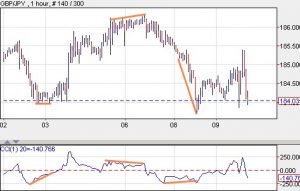
Simple, obsolete indicators can work just fine, as long as one expects them to be wrong 50% of the time. Take CCI for example, it can produce meaningful divergences. Once confirmed by intermarket analysis and more indicators one can narrow down the exact time. Where the market will make a move.

It’s the Non-Routine Element Which Prevents Perfect Trading

Anyone who knows how to trade forex profitably, has found that all classic and commercially available indicators work on collective, coordinated trading action. But markets only follow coordinated action for a little while, as soon as traders of longer time frames enter the market the routine breaks, something unforeseen happens, and these indicators give nonsensical signals. And what is forex without these unforeseen events, it’s simply a period of time where coordination takes control and the market moves on momentum, or lack of momentum, and trades in very predictable ways. Thereby creating the illusion that these indicators have continuous predictive power, but in reality they don’t. The non-routine nature of the markets is what makes them ever more interesting and more profitable in the long run. So uncertainty is what makes them work. If they were predictable as brief periods would have you believe, then everyone would start using MACD and CCI and moving averages, in perfectly routine profitable trading, more and more people would trade in exactly the same way, to the point where no one would take the other side of the trade. At that point markets would be moving so fast, that you would have only few seconds available to read these indicator and make the trade, before the market moved.

Why Traders Use Forex Charts

Forex charts provide powerful insights and patterns into the currency market. And more importantly make technical analysis work, because of collective thinking.

How Forex Charts Make Technical Analysis Possible

Traders use forex charts because they provide great insights into how currencies trade, but also into how other traders think. All forex strategies rely more or less on chart analysis, factors such as volatility and momentum can be seen and understood at a glance. Without charts, it would be very difficult to get a sense of of these factors and make wise trading decisions. This is because humans understand much more and much faster out of graphically represented data, than simple numbers where price history cannot be put in perspective. Not just traders, but all kinds of analysts use charts. All kinds of scientists and physicists use charts and diagrams to simplify analysis techniques. A famous example are Feynman diagrams, invented by physicist Richard Feynman. They were originally opposed by his colleagues, but later adapted for good, by physics. Simply because they illustrated how subatomic particles behave, in a simple way which related time and other parameters. And as a result, even a non scientist could figure things out, as opposed to series complicated equations. So graphical representation is very powerful in many fields, not just trading and investing. Some market analysts developed many insightful trading methods based on charts. Those were charts showing trading volume, the relation between price and volume, or price relative to all kinds of indicators, such as momentum and strength indicators.

forex charts
Traders are actually connected through the charts, and they act upon them. The impact of the 200 bar moving average is only one example of this.

Charts Reflect Traders’ Thoughts and Actions

Forex charts reflect so much more information that one tends to think. All traders who want to learn how to trade forex start their journey of learning on charts. Regardless if they are learning on their own, or they have a mentor, charts tell the whole story all in one picture. One can figure out how the forces of supply and demand make currency pairs move up and down, how traders panic or make confident trades, and so much more. Trading is really possible exactly because of the insightful views that charts provide. What is forex trading like without using charts? Without using charts a trader can still trade, but they will have no idea how the other traders think, whose collective actions move the currency markets. So such a trader would be at disadvantage, and they will always be one step behind the latest action. Momentum indicators, support and resistance levels, and the entire trend in any currency pair can all be figured out correctly, only when charts are used. Everybody, even floor traders who trade stocks, do use some kind of chart before going onto the trading floor. They actually do this at home, and they go to the trading floor having taken some support and resistance numbers out of those charts. Hence no trader trades without charts, even if it seems so. The forex market is decentralized, there is no trading floor, no market noise, and all forex traders around the world are simply connected through the common charts they look, study and act upon.

Guide to Best Online Forex Converter for CFD Traders

A forex converter is a program that allows for the instantaneous conversion of a currency based on existing current exchange rates. For individual traders, generic and all-purpose currency converters are most often found and used online and can convert the value of one currency to another, such as euros to US dollars. This process of converting one form of a country’s currency into another’s usable currency, based on spot exchange rates, underlies  all international commerce and financial activity.

In its simplest form, the calculation is a single rate deterministic formula and the two parties have only an approximate knowledge of the rate at which the exchange takes place as the transaction usually also involves market makers, brokers and other sundry intermediaries.  Particularly for currency trading and forex trading, where values are calculated to the level of pips (usually thousandths of a unit), accuracy and exactness are required for forex converters to be helpful.

Forex Trading

In understanding what is forex, exchange rates are the integral components in a forex calculator. Simply put, an exchange rate is the value of any two currencies, one to the other at a given instant. For example, markets are open nearly perpetually (22 of 24 hours per day) for FX trade, so you can almost always trade one U S dollar for a certain number of Japanese Yen (denominated in hundreds of  Yen per dollar).

A forex calculator is not needed for all currency trading and forex trading. Obviously, in cases where currencies are pegged, one to another or a basket, a constant value is in place. But in cases where the exchange rate is floating (variable and subject to change), the market forces of supply and demand affect the exchange rate. Of immediate practical influence are the amount of the respective foreign currencies held in the counter-party central bank vaults.  In addition direct trade relations between the two countries can affect their relative exchange rates. The Chinese Yuan was pegged to the dollar with only infrequent reevaluations until 2015 when macroeconomic and financial pressures forced a number of revaluations to the peg. As of this writing the Yuan joined the IMF reserve currency basket and the ability of China’s rulers to manipulate the currency became more constrained.

Pegged Currencies

But other currencies do stay pegged, seemingly forever. For example, the Qatari riyal has been worth $0.274 since 1980.

Floating exchange rates (and the need for a forex converter) is the most efficient system as the ability through currency trading and forex trading to address imbalances in flows and perceptions translates into uninterrupted activity for all those involved. Forex converters have implication well beyond the confines of the $5 trillion per day foreign currency market. Both knowingly and implicitly, any trade that includes any component which was made or priced beyond that of a single national or block currency involves a forex converter.

When we ask “What is forex trading?”, we assume an answer including forex converters.

person may receive less or more value after the currency is converted. This can be determined by looking at the current exchange rate for the country’s currency.

The Many Varieties of Forex Calculators

Forex calculators have been an integral element in the arsenal of forex brokers and traders since the beginning of time and while advanced versions at present can perform multiple calculations with multiple variables, the actual mathematics involved is usually straightforward algebra. In addition to forex calculators, forex brokers also use forex charts. All in an effort to understand what is forex.

Most popular forex calculators

  •  Profit / Loss Calculator — This forex calculator version is the basic accounting calculation. Input parameters include: the Trading Pair; the denominating account currency; whether buy (long) or sell (short); the trade opening and closing prices;  and the lot sizes. Results are given in either pips or monetary values
  • Lot Size Calculator — To understand the financial magnitude of a given trade, use this tool to calculate the position size in units and lots to precisely manage your risks. Correct lot sizing is key to managing your risk and to avoid excessive exposure to your account from a single trade. Input parameters include: Trading pair, stop / loss in pips, risk in percent, the account balance and the account currency
  • Stop / Loss Calculator — Use this calculator to determine exactly how much you stand to profit or lose when your respective stop loss and take profit levels are reached. Simply select the currency pair you are trading, enter your account currency and your position size. Included in the parameters are: the trading pair, lot size, acceptable risk in percentage-of-principal terms, the account balance and the account currency. The resulting calculation yields the maximum stop loss, in pips.
  • Margin Calculator — Margins allows you to buy securities by borrowing money. Thus, the margin calculator allows to compute the margin you need to hold open positions. The inputs consist of Trading Pair, leverage, account currency, and  lot size.

What is Forex

Forex calculators come in variations from different forex brokers. Depending on their expertise, business model and market presence, different forex brokers will bundle their trade opportunities. Usually forex calculators are offered as inducements for trading along with forex charts. Forex charts are the key analytic tool in the beginning portion of trades wherein you decide which position to initiate. Forex charts have numerous components, including:

  • Time Units — Dividing your trade duration into helpful sub-units is critical in generating a meaningful chart.
  • Representative Graphical Elements — Enhancing the two dimensional tracking with multidimensional representation, like with Japanese candlesticks, is also of the utmost importance
  • Overlaying Indicators — Harnessing the computational power (if not the algorithmic subtlety) of cloud computing allows individual traders to pick and choose from among a plethora of offerings currently popular, like: Bollinger Bands, MACD (moving average convergence/divergence), Stochasitc Ocillator and more
  • Graphical Elements — The human tendency and ability to see patterns is aided by an innate semiotic capacity. Thus basic shapes and lines as well as more nuanced Fibonacci retracement and Gann Fan patterns help make sense of analog data patterns.

In conclusion, we have looked at the topic of forex calculators from several perspectives and found it to be an integral tool, like forex charts, for thoase trying to understand what is forex.